
7 Everyday Ways to Make Room for Play
What if making room for play didn't mean adding seven more activities to your lesson plan?
Sometimes, it starts with paying attention to the experiences children are already having and finding ways to build on them.
During my days with the youngins’, I think through seven simple ways I could make room for play: Create, Move, Sing, Discuss, Observe, Read, and Play.
Here's what that looked like.
1. Create: Make Something Together
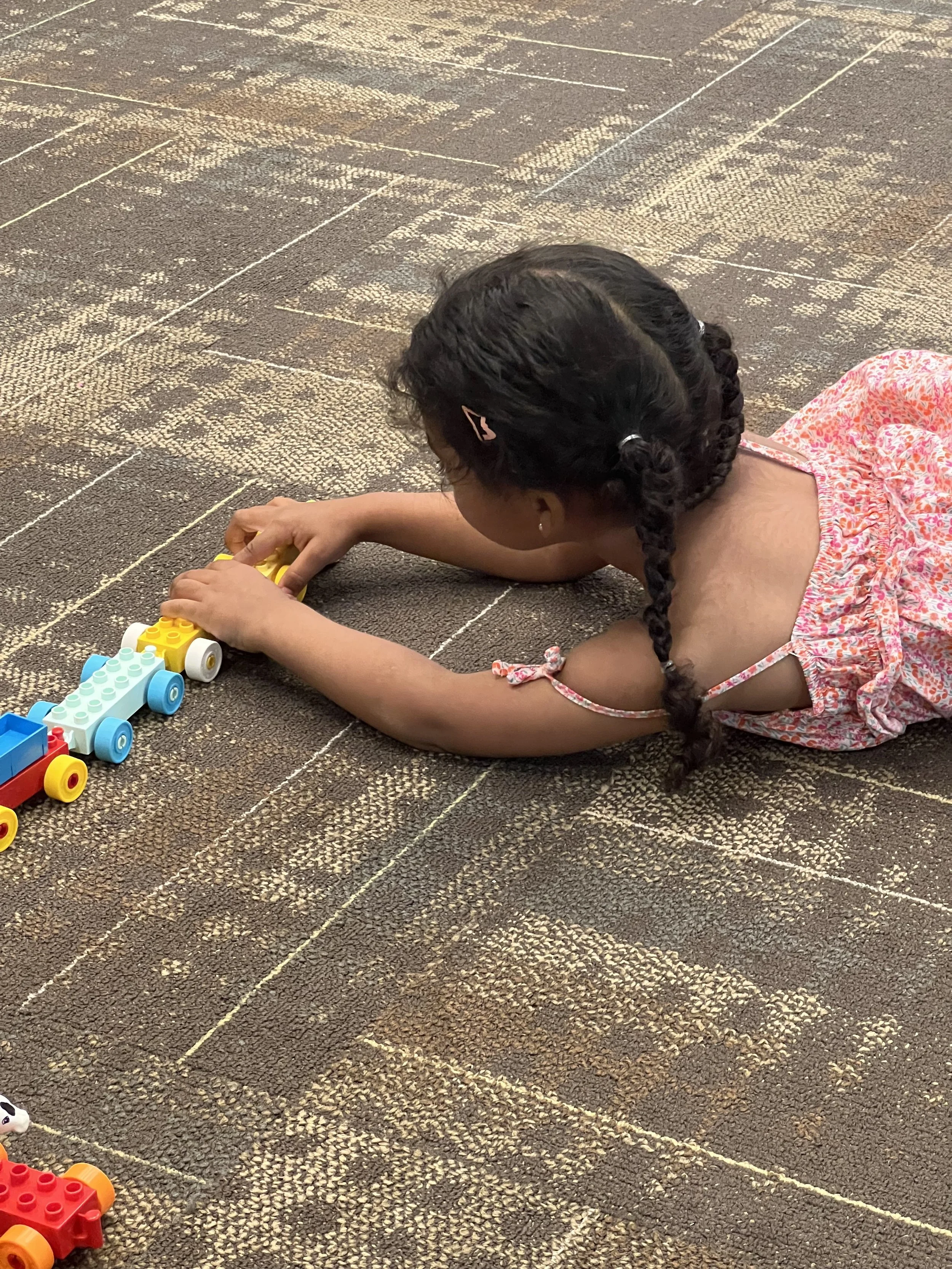
We used cube connectors to create a colorful line of trains. As we move them, we called out each color.
A simple building experience became an opportunity to create, notice colors, and talk about what we were making.
TRY IT!
Offer blocks, connectors, or recycled objects and see what children decide to build. You don't have to provide a model for them to copy.
2. Move: Let the Body Get Involved
Walking outside
Running down big hills
Following a snail's movement along the ground.
Movement doesn’t need to be a separate lesson. It’s part of how we explore our surroundings.
Try it: Find a safe space to walk, climb, dance, stretch, or move like an animal. Follow children's curiosity while making room for active exploration.
3. Sing: Bring Music Into the Day
Singing along to playlists on the phone is another way to enjoy language and familiar songs together.
Try it: Sing during transitions, make up silly songs, or revisit familiar favorites. You don't have to be a professional singer to share music with children, trust!
4. Discuss: Talk About What You Notice
Talk about pictures on letter cards.
Conversations don't always need a formal question-and-answer format. Talking about what children see, notice, and wonder about can create opportunities to share ideas and build language.
Try it: Describe a picture together, wonder aloud about something you see, or invite children to tell you what caught their attention. Give them time to respond.
5. Observe: Slow Down and Look Closer
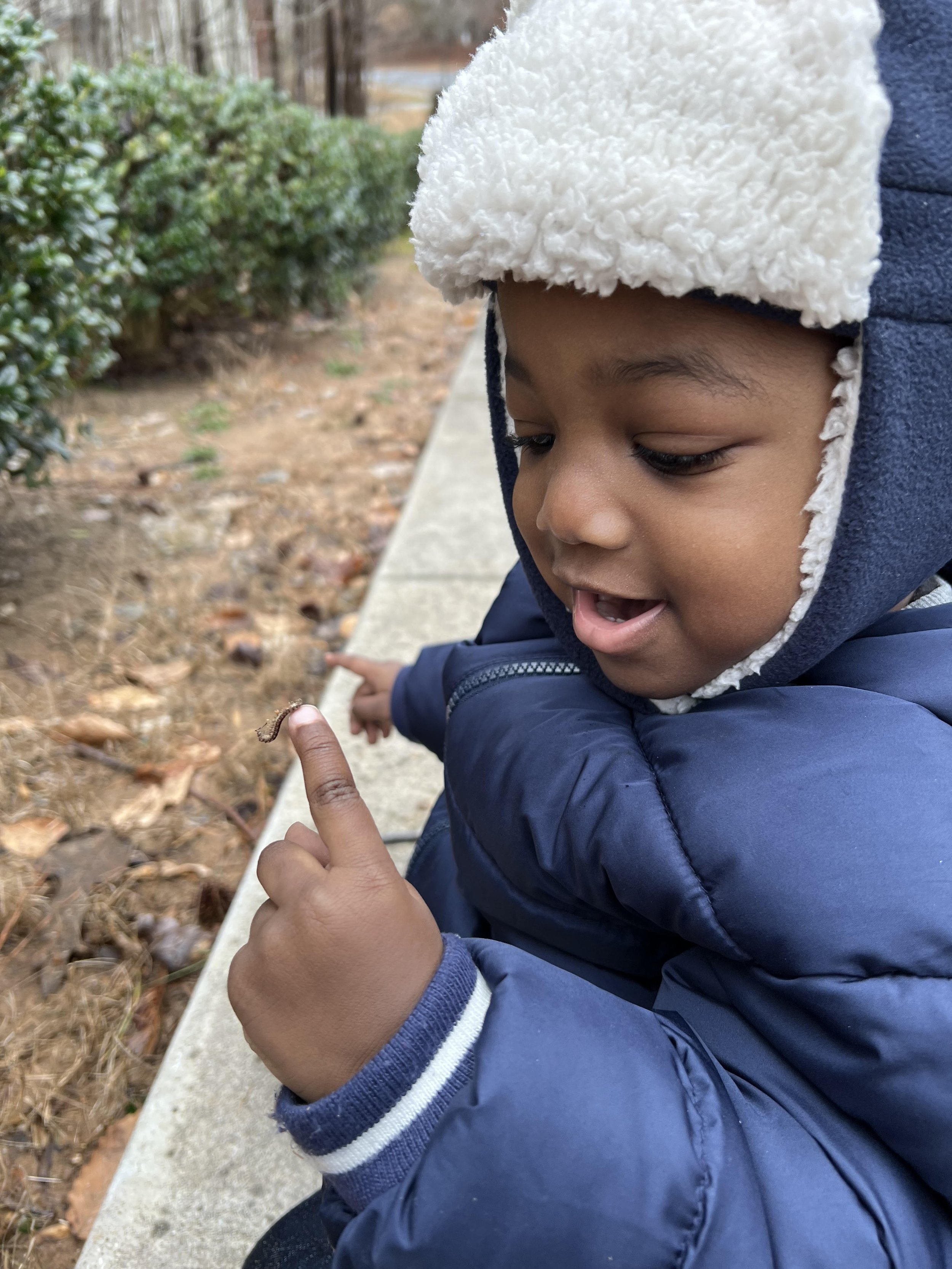
Bugs always steal the show!
Watching how they move in and how they travel across the ground encourages us to slow down instead of rushing past little discoveries.
Try it!
Look closely at a leaf, watch an insect from a safe distance, notice clouds, or investigate what happens when water runs across different surfaces. You don't need to have all the answers. Wondering together is part of the experience.
6. Read: Make Room for Stories
Reading is usually part of my routine after coming inside from outdoor play.
Making room for reading matters, but routines don't always unfold perfectly. We can look for another opportunity rather than treating one missed moment as a failed day.
Try it: Keep books accessible, revisit a favorite story, or connect a book to something a child noticed during play. Even a few minutes with a book can create a meaningful shared experience.
7. Play: Follow the Child's Lead
Rather than treating play as something separate from learning, I make room for it to travel with you throughout the day.
Try it: Pay attention to the toy, character, or idea a child keeps returning to. See whether you can incorporate that interest into conversation, movement, storytelling, or exploration.
Play Doesn't Have to Be Complicated
These are not seven elaborate lesson plans. They are simple ways to create, move, sing, discuss, observe, read, and play throughout an ordinary day.
Some experiences overlapped. Others didn't happen exactly as planned. That's okay.
The goal isn't to squeeze every possible learning opportunity into every day. It's to notice what children are experiencing, make room for meaningful exploration, and respond to what interests them.
Your next step: At the end of the day, ask yourself which of these seven experiences you made room for. If one was missing, consider what might have made it difficult and where you could create an opportunity tomorrow.
You don't need a perfect schedule. You need a willingness to notice, respond, and make room for play.
Play-Morr: Making play-based learning practical for real life